Salt Lake City, Utah (801)
864-6401 Las Vegas,
Nevada (702)
379-5104
9:00 a.m. to
9:00 p.m. Pacific Standard Time Contact Us
Now Canine Behavior Specialists
DOG AGGRESSION
If your dog has aggression issues, you
definitely need professional help. Don't be fooled by amateur and hobbyist dog
trainers into believing group obedience classes will help. They almost always
make it worse. Giving an aggressive or dominant dog food to train it is
extremely dangerous.
Food-Bribery make many dogs aggressive and
dominant.
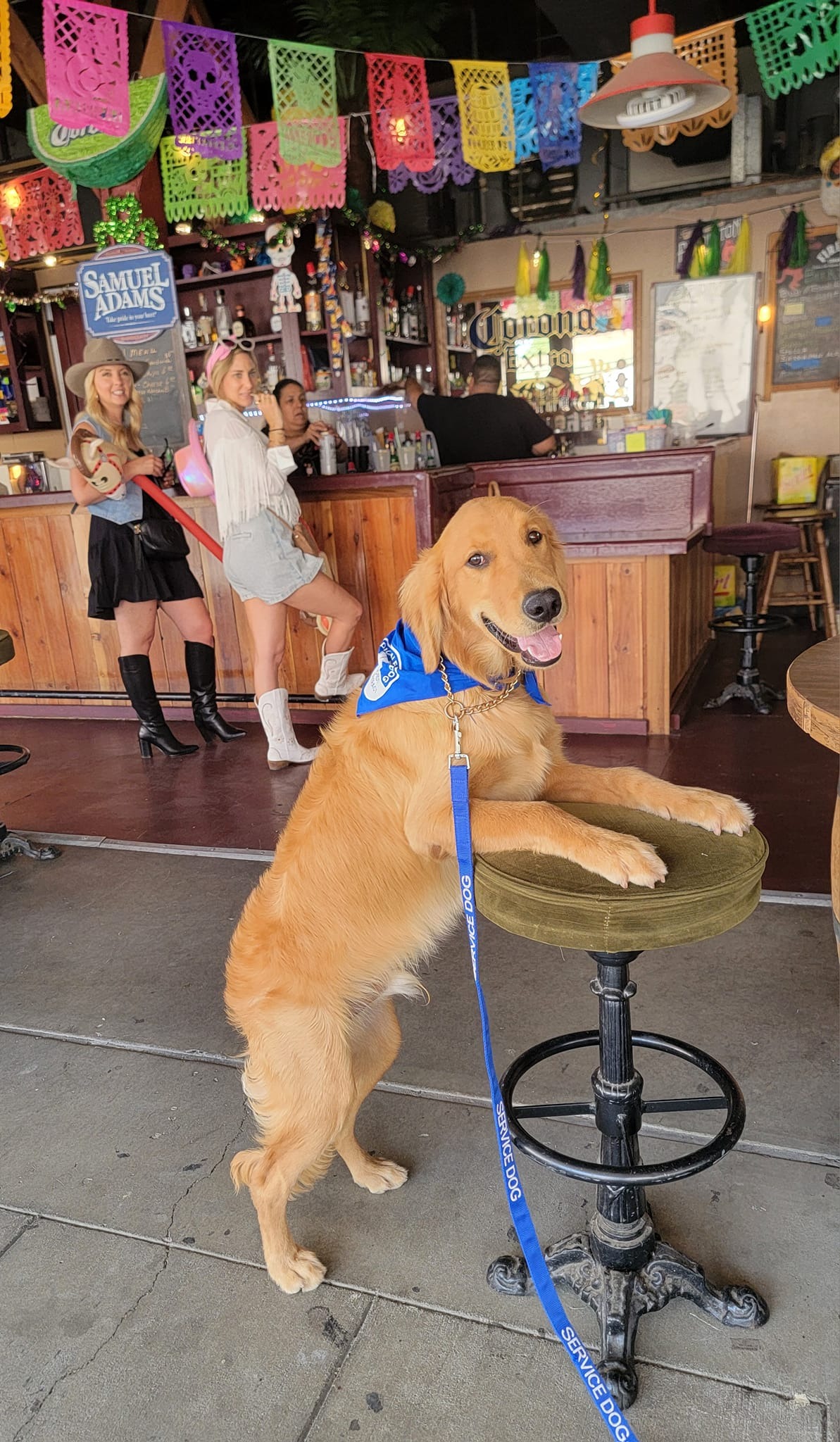
Before you hire a dog trainer, show them this picture and
ask if they can make a dog like this "Lay Down" and "Heel" during the first
lesson. Aggressive dogs and big dogs terrify most Food-Bribery trainers.
Food-Bribery are almost always the first
to tell you to euthanize your aggressive dog, especially breeds like
Rottweiler, Pit Bull, Chow Chow, Shar Pei, German Shepherd, Great Dane,
Doberman Pinscher, Akita and Jack Russell Terrier.
Bribing
with food makes many dogs even more dangerous to children.
Canine
aggression and dominance almost always escalate. Please, for your own safety
and the safety of others, call us now at (916) 927-7725 and we would be
glad to discuss your situation and provide you a consultation at no
cost.
Classes are dangerous and often make aggression worse.
Because aggression is complex, and
because the potential consequences are so serious, we recommend that you get
professional in-home dog training to control any aggressive
behavior.
Hire the
best dog trainer in your area if children are at risk.
Dog
training classes do virtually nothing for behavior problems at the
home.
What is the likelihood of your dog getting trained in the aisle of a
pet shop or at the park with ten other dogs lunging and snapping at him or
her?
Fear-Motivated
Aggression:
Fear aggression is
aggression that occurs when the dog is frightened, regardless of whether or not
there is something to be afraid of. The dog is frequently attempts to avoid an
encounter by backing up while growling and becomes dangerous and bites or snaps
when it is cornered. Sometimes these dogs will bite from behind and run away.
In any case it is inappropriate to physically punish these dogs as it simply
re-inforces their belief that there was something to be afraid of in the first
place. Equally inappropriate is trying to soothe the dog while he behaves that
way since that actually has the effect of rewarding the inapparopriate
behavior.
All it
takes is one dog attack in a group class to make your dog dog-aggressive for
life.
If you love your dog enough, almost always we can help you to
keep him. Call us before you decide to destroy your dog.
Redirected
Aggression:
The hallmark of this form of
aggression is that it occurs when the dog is in the midst of another aggressive
behavior - for instance, the dog is fighting with another dog and the owner
reaches for the dog's collar and is bitten. Most often it is in response to an
attempt to interrupt the aggressive episode the dog was already involved
in.
Inter-Dog
Aggression:
Aggression towards other dogs is not
always interdog aggression; it may be fear aggression or territorial
aggression. Most instances of interdog aggression are between dogs of the same
sex: two females fighting, or two males fighting, but this is not always the
case. Often the dogs are of the same relative size and age, but often with dogs
fighting who are residents of the same household, one is an older dog and the
other is a younger one who lived in relative harmony until the younger one
neared maturity. Hence, having dogs "grow up together" does not insure that
they will get along as adults. Most dog to dog aggression first presents itself
when the dog is mature (roughly 18-24 months old). It is possible for a dog to
live in harmony with another dog, yet not accept dogs who do not live in the
household and vice versa. Also, dogs fighting with each other does not imply
that either dog is going to be dangerous to people.
Play
Aggression:
Barking, growling, and snapping while
playing with people and other dogs indicates play aggression and it usually
occurs in younger dogs. These puppies grab fingers, hands, legs, and clothing
or will grab your hand or arm instead of a toy you are holding. There is a such
thing as play growling which is not indicative of aggression - play growls are
usually high-pitched, short, and frequently repeated as opposed to the lower
pitched sustained growls of a serious threat. However, some dogs do not change
their pitch when growling or change it so quickly that the owner has no time to
react. These dogs often raise their hackles, flatten their ears, and dilate the
pupils. Play aggression may become self-sustaining since play is a rewarding
activity and some sources have reported that the dog may become more aggressive
to evoke a response from the owner.
Possession
Aggression:
Dogs with possessive aggression guard
things (as opposed to food, space, or people). These dogs will not relinquish
toys or stolen objects even if they present them to the owner in an apparent
solicitation of play - when the owner reaches for the item, the dog growls,
snarls, snaps, or bites. Statistics indicate that 25% of the dogs with this
type of aggression exhibited symptoms before the age of 3 months and 50% showed
signs before they were a year old.
Food-Related
Aggression:
As the name implies, this is
aggression that occurs in the presence of food or "food-type" items such as
rawhides, bones, treats, etc. This form of aggression directed towards people
is believed to be the best early indicator that dominance aggression is likely
to develop. There are dogs that are food-aggressive only to other animals in
the household. Severity varies from growling to snarling, lunging and biting;
generally the higher quality the food the more severe the aggressive response
to a real or perceived threat.
Territorial
Aggression:
The dog which is territorially
aggressive defends space - for example, his yard, his crate, or his "personal
space" - a mobile area encompassing a certain distance around himself. The
hallmark of these dogs is that they are not aggressive when they are moved out
of their territories - except for the dog with the "personal space" issue whose
area moves with him. The use of fences frequently sets up clear boundaries for
the dog to defend and restricting the dog with a chain seems to have the same
effect.
Predatory
Aggression:
Two types of behaviors commonly fall
within a diagnoses of predatory aggression. The first type is the dog that
stalks "small prey" which can be birds, squirrels, cats, small dogs or other
critters. These dogs may or may not be dangerous with infants, but because
infants act in a manner similar to small prey, these dogs warrant special
attention. The second type is the dog that chases moving objects such as
joggers, bikers, skateboarders, etc. Some of what looks like predatory
aggression may be territorial aggression. Dogs which are exhibiting territorial
aggression generally have a "boundary" where the behavior starts and stops -
for example, it occurs when the dog is home, but not when taken to the park for
an outing.
Protective
Aggression:
This form of aggression is
characterized by a dog who perceives a threat to his owner, handler, or family
member (may be another dog) when there is no actual threat. Common scenarios
involve the strangers or people known to the dog at the door, when someone
approaches a car the dog is sitting in with his owner, or when another dog
approaches. These dogs sometimes react to raised voices, and people hugging.
The thing to remember here is that the protective aggressive dog is behaving
aggressively when no real threat exists, which differs significantly from the
same behavior when an actual threat does exist.
Fear
Aggression:
Fear aggression is aggression that
occurs when the dog is frightened, regardless of whether or not there is
something to be afraid of. The dog is frequently attempts to avoid an encounter
by backing up while growling and becomes dangerous and bites or snaps when it
is cornered. Sometimes these dogs will bite from behind and run away. In any
case it is inappropriate to physically punish these dogs as it simply
re-inforces their belief that there was something to be afraid of in the first
place. Equally inappropriate is trying to soothe the dog while he behaves that
way since that actually has the effect of rewarding the inapparopriate
behavior.
Idiopathic
Aggression:
Idiopathic aggression is an
unprovoked, unpredictable form of aggression with no known cause. Dogs
frequently get a "crazed" look seconds before they become violent. This form of
aggression is very difficult to diagnose correctly because the age of onset is
1-3 years which corresponds with the age that dominance aggression and
idiopathic epilepsies first present and the symptoms of this disorder are very
similar not only to dominance aggression and epilepsy, but numerous other
medical behavioral disorders such as rage syndrome.
Maternal
Aggression:
Maternal aggression occurs only during
pregnancy, "false pregnancy", and in the presence of pups. Mother dogs
sometimes "guard" their babies from very long distances and generally do not
bite unless the puppy or toy (which the dog perceives to be a puppy during a
false pregnancy) is taken. Repeated perceived threats may cause the mother dog
to kill and/or eat the puppies.
Pain
Aggression:
As the name implies, this form of
aggression is a response to pain the aggressive dog is experiencing. This pain
can be acute as in a sudden injury (hit by a car) or chronic (as in hip
dysplasia). Most dogs suffering pain aggression will warn first, but not
always. Treatment involves pain management. Veterinarians have to contend with
this type of aggression frequently and may do so using muzzles (to limit
damage) or by using sedatives or anaesthesia to treat the dog. Children are
also victims of this type of aggression since they frequently make poor
decisions (play roughly) and are uncoordinated when playing sometimes tripping
over or falling on a dog. Children as young as 18 months can be taught to treat
a dog gently and approach it safely. Children and dogs should always be
physically separated when there is no adult present to supervise both in a
direct line of sight.
Dominance Aggression:
DOMINANCE, or dominance-related, aggression is one of the most common
forms of canine aggression. It is manifested by consistent atypical,
out-of-context aggressive behaviors directed toward people. These behaviors
include growling, snapping, and biting. Bites are usually not preceded by a
vocal warning.'
Dogs display dominance aggression in a variety of
circumstances. What links these events is a dog's attempt to control situations
involving people. Typical provocative situations include:
Disturbing a
dog while it is sleeping
Pulling a dog's leash to correct it
Reaching over a
dog's head to attach a leash
Grooming a dog
Staring at a dog
Hugging a dog
Handling a dog's muzzle or face
Conducting
restraint exercises
Administering physical punishment.
Targets of the aggression may include one or more family members, or
a dog may be aggressive to strangers only. Some dogs are aggressive only during
a household commotion that distresses them. Not all household members may be
equally victimized by dominantly aggressive dogs. Some dogs react aggressively
toward young children because children are at the same eye level as the dogs
and their staring is perceived as a threat. A more compliant family member may
be victimized more often than someone who is firm with the dog because the dog
knows it can push around a compliant person. Conversely, some dominantly
aggressive dogs know they can victimize compliant people so they leave them
alone and challenge the more forceful family members instead.
Canine
dominance aggression typically develops at social maturity, which usually
occurs between 18 and 36 months of age. Although most dominantly aggressive
dogs are male, this condition can occur in females, often at a young age (8
weeks to 8 months).
Dominance aggression is not controlled by hormones,
but the presence of androgens, including testosterone, or the lack of estrogen
during sexual and social development may exacerbate the aggression. The fact
that dominance aggression usually occurs at social maturity suggests that
owners don't cause this problem.
Diagnosis
Before making a diagnosis of dominance aggression, rule out any
medical causes of aggressive behavior. Some medical conditions (e.g.
neoplastic, infectious, or neurologic disease) and their treatments can cause
dogs to be more reactive and to behave inappropriately.
Once medical
causes have been ruled out, a diagnosis of dominance aggression is based on the
recurring presence of the atypical aggressive behaviors described above. A
definitive diagnosis can be made if an aggressive response intensifies when a
dog is physically or verbally corrected or its behavior is interrupted.
Dominance aggression is not linked to one specific circumstance, and
its diagnosis should not be based on a one-time event. For example, a diagnosis
should not be made if a dog bites only when pushed from a bed; the dog may have
been frightened or hurt. But a diagnosis can be made if a dog bites when pushed
from the bed and also exhibits other aggressive behaviors (e.g. it growls when
the owner reaches over its head to place a leash, yells at it, or disturbs it
while sleeping). These behaviors stem from the dog's urge to control rather
than from a specific activity.
Dominance aggression is not specifically
linked to food-related, possessive (toys), or territorial aggression, but it
can occur concurrently with these disorders. If so, the situation may be
severe."
The frequency and intensity of aggressive behaviors do not
affect the diagnosis. But these factors may affect the prognosis and the dog's
potential danger to people.
Dominance vs. assertiveness
In diagnosing dominance aggression, remember that the
term dominance is often used erroneously. Use the term only when describing an
individual's ability to maintain or regulate access to some resource in a
staged contest.6-8 The word dominant should not be used to describe a dog that
is merely assertive, confident, or pushy. A dog can be pushy or assertive
without being dominantly aggressive; such a dog can "talk back" and snort at
people, but it isn't aggressive in the situations discussed above. Pushiness or
assertiveness is a personality type. In fact, many owners prefer confident dogs
because they work well in obedience situations and are thought to have good
personalities. Because the terms dominance and dominance aggression are often
used erroneously, I ask owners to avoid using these loaded terms and instead
describe what their dogs are actually doing.
The two
categories of dominantly aggressive dogs
Because it
is associated with social contexts, dominance aggression, like other forms of
aggression, is probably an anxiety disorder. Dogs with dominance aggression can
be divided into two broad groups: 1) those that know they are in control and
can compel their owners to do their bidding, and 2) those that are unsure of
their social roles and use aggressive behavior to discover what's expected of
them.
Contrary to the commonly held view of dominance aggression, dogs
in the first group are rare. Most dominantly aggressive dogs are in the second
group. These dogs receive information about their social and behavioral
boundaries based on how their owners react to their aggression. This is
analogous to disruptive and sometimes aggressive teen-age children with
behavior problems. Dogs in this category appear to be less sure of their
relative hierarchical status. They express more ambiguity in their vocal and
physical responses to what they perceive as threats. Dogs in the second group
do not direct aggression equally toward all people because they respond
differently to each social interaction.
According to data obtained at
the Behavior Clinic at the University of Pennsylvania's Veterinary Hospital,
most dogs in the second group also exhibit attention-getting behavior (Behavior
Clinic, Veterinary Hospital, University of Pennsylvania: Unpublished data,
1999). These dogs are needy and are constantly setting people up to attend and
defer to them. They have an abnormal urge to control and often challenge others
to determine their roles in the social environment. Because affected dogs have
an anxiety disorder and are using provocative behaviors to get information,
physical punishment has no place in teaching appropriate behavior. Physical
punishment removes uncertainty and convinces these dogs that the person
punishing them is a threat. Accordingly, their aggression worsens. Hitting,
beating, or kneeing an affected dog creates an adversarial relationship and
reveals a lack of understanding about canine aggression and anxiety.
Recognizing subtle dominance aggression behavior
Much has been written about dogs seeing people as part of their pack.
This simplifies the situation. It is more likely that dogs and people can live
together successfully because dogs and people have similar social systems. Dogs
live in extended family groups, have extended parental care, and use vocal and
nonvocal communication. More important, dogs and people both have social
systems based on deference, not physical violence and control. Many people
think that dogs constantly fight for control and status. On the contrary,
studies of wolf and wild dog behavior indicate that aggression and violence are
the exception. There is a relative hierarchy of social rule structure, and
status can be affected by the age and sex composition of the social group and
by an individual's skills.
Because dogs and people have similar social
structures, we recognize many canine signals. Unfortunately, this similarity is
also a problem because people assume that dogs' signals are exactly like ours.
For example, some owners think that a dog is giving them a hug when the dog
places its paws on the owner's shoulders. This is not a hug, it is a challenge.
In communication between dogs, pressing on another with the front feet is a
clear challenge. By petting dogs that are actually challenging them, owners
inadvertently defer to the abnormal dogs. This petting can worsen the dogs'
behavior.
Many affected dogs exhibit subtle dominantly aggressive
behaviors that cause clients to redirect their activities. For example, an
affected dog will lie in front of a door or furniture so that its owner has to
avoid the area, or it may lean against or have a paw resting on the owner at
every opportunity. Owners need to distinguish these behaviors from mere
pushiness or attention-seeking. For example, if a dog is leaning against its
owner just to get attention, the owner can physically move the dog without its
becoming aggressive. Unlike most dominantly aggressive dogs, dogs that lean on
a person for attention do not stiffen, open their eyes, and move with the
person so they are again touching or pressing. Dogs seeking closeness usually
respond to verbal cues to stop leaning and then use solicitous behavior (e.g.
turning their heads sideways, rolling over, whining, wagging their tails,
putting their ears loosely back). Dominantly aggressive dogs may stiffen and
"talk back" by grumbling or growling. Later, the growling may get deeper in
pitch, and the dog's stance, vocalization, or actions (e.g. biting) may become
more threatening. In such cases, caution is urged.
What To Do
First check with your veterinarian to rule out
medical causes for the aggressive behavior.
Seek professional help. An aggression problem will
not go away by itself. Working with aggression problems requires in-home help
from an animal behavior specialist. Call us at (916) 927-7725
Take precautions. Your first priority is to keep
everyone safe. Supervise, confine and/or restrict your dogs activities
until you can obtain professional help. Youre liable for your dogs
behavior. If you must take your dog out in public, consider a cage-type muzzle
as a temporary precaution, and keep in mind that some dogs can get a muzzle
off.
Avoid exposing your dog to situations where he is
more likely to show aggression--like dog training classes. You may need to keep
him confined to a safe room and limit his people-contact.
If your dog is possessive of food, treats or a
certain place, dont allow him access to those items. In an emergency,
bribe him with something better than what he has. For example, if he steals
your shoe, trade him the shoe for a piece of chicken.
Spay or neuter your dog. Intact dogs are more
likely to display dominance, territorial and protective aggressive
behavior.
What Not To Do
Enroll in a dog training
class.
Punishment wont help and, in fact, will make
the problem worse. If the aggression is motivated by fear, punishment will make
your dog more fearful, and therefore more aggressive. Attempting to punish or
dominate a dominantly aggressive dog is likely to cause him to escalate his
behavior in order to retain his dominant position. This is likely to result in
a bite or a severe attack. Punishing territorial, possessive or protective
aggression is likely to elicit additional defensive aggression.
Dont encourage aggressive behavior. Playing
tug-of-war or wrestling games encourages your dog to attempt to "best" you or
"win" over you, which can result in the beginning of a dominance aggression
problem. When dogs are encouraged to "go get 'em" or to bark and dash about in
response to outside noises or at the approach of a person, territorial and
protective aggressive behavior may be the result.
Call us
if other dog trainers tell you that your dog can't be trained and needs to be
euthanized.